
Thanks to their compact, space-saving design, prismatic LiFePO4 battery cells are an ideal solution for portable electronic devices, energy storage systems, and electric vehicles alike. Differing in shape from cylindrical cells such as the 18650 or 21700, these lithium-iron-phosphate-based LiFePO4 batteries are not only versatile in use but also offer a particularly popular choice due to their safety, long service life, and consistent performance. Check out the details and order now!


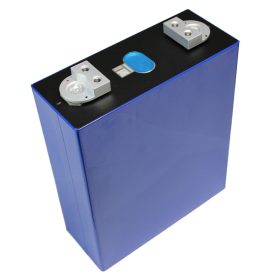


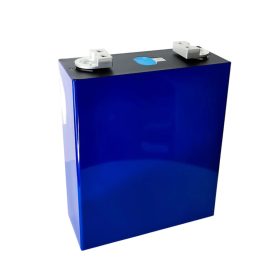
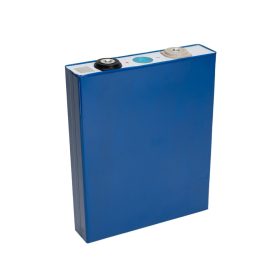
Prismatic LiFePO4 Battery Cells
Thanks to their long service life, high operational safety, and excellent cycle stability, prismatic LiFePO4 batteries are widely used in both residential and industrial environments. Since these rectangular cells based on lithium-iron-phosphate technology can be arranged in a space-saving manner and easily integrated into numerous energy storage systems, they are particularly advantageous for building custom battery packs.
Why choose prismatic LiFePO4 battery cells?
When it comes to safety, LiFePO4 technology always ranks highly. With the significantly more stable lithium-iron-phosphate chemistry compared to conventional lithium-ion batteries, the risk of overheating or thermal runaway is lower. Moreover, thanks to their low self-discharge rate, they retain their charge during longer storage periods and are capable of operating across a wide temperature range. Since LiFePO4 cells can achieve up to 3,000–8,000 cycle life depending on application conditions, they offer a considerably longer service life compared to other technologies.
What applications are they suitable for?
Thanks to their versatile usability, prismatic LiFePO4 cells are an excellent choice for electric vehicles, caravans, boats, solar systems, off-grid setups, industrial energy storage, or backup power systems alike. Due to their high current output capability and long cycle life, they are effectively used in applications regularly subjected to deep discharges, as well as in modular configurations for building higher-voltage battery packs.
Advantages of EVE LiFePO4 cells
EVE is one of the most renowned manufacturers of LiFePO4 battery cells, whose products are widely utilized in various energy storage and mobility projects around the world. The manufacturer's cells feature low internal resistance, which results in better efficiency and less heat generation during charging and discharging. Since the cell parameters match each other very well, assembling reliable battery packs is also made easier.
How to choose the right capacity?
Whatever the application, selecting the right capacity is always crucial. Therefore, it is advisable to first determine how much energy you wish to store and what power demand the system needs to serve. For smaller consumers or shorter operating times, lower-capacity cells may suffice, whereas solar energy storage, caravans, or larger electrical systems may require higher-capacity cells. Additionally, the planned system voltage, expected daily energy consumption, and available space should all be taken into account to help achieve proper sizing.
Frequently Asked Questions
1. What is the difference between prismatic and cylindrical LiFePO4 cells?
Prismatic cells have a rectangular shape, making them space-efficient for installation in various battery packs, while cylindrical LFP batteries are smaller, cylinder-shaped units. For high-capacity energy storage systems, prismatic cells are generally more popular because the same capacity can be achieved with fewer cells.
2. How many cycles can a LiFePO4 cell handle?
High-quality LiFePO4 cells can endure up to 3,000–8,000 charge-discharge cycles, but their actual lifespan depends on operating conditions, charging voltage, depth of discharge, and ambient temperature. With proper use, a service life of over 10 years can be expected.
3. Is a BMS needed for a LiFePO4 battery?
Yes, in most cases, it is recommended to use a BMS (Battery Management System) for LiFePO4 batteries. This effectively protects the cells from overcharging, over-discharging, overcurrent, and helps balance the voltage of individual cells.
4. Can they be connected in series or parallel?
LiFePO4 cells can be connected in both series and parallel. Series connection increases voltage, while parallel connection increases capacity and available current, so the more advantageous configuration always depends on the specific application.
5. What charger can be used with them?
For LiFePO4 batteries, it is recommended to use a specifically designed LiFePO4-compatible charger, as these provide the correct charging voltage and charging profile, protecting the cells from damage. It is important to note that chargers designed for lead-acid batteries are not always suitable for safely charging LiFePO4 batteries – this depends on the charger type.


