
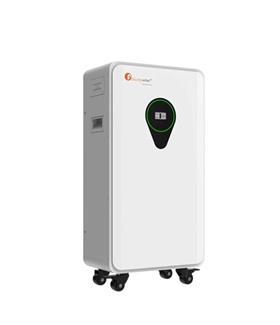
7 Key Factors to Consider When Choosing the Ideal Home Energy Storage System
With the spread of solar panel systems, the demand for home energy storage systems has also skyrocketed, since they allow the energy generated during the day to be stored, thereby optimizing energy usage. However, choosing the right energy storage system can pose serious challenges for users. In this article, we present seven key aspects that are definitely worth considering when searching for the most optimal energy storage system.
1. Capacity and expandability
Capacity is one of the most important considerations when choosing an optimal home energy storage system. This figure indicates how much energy the battery can store, typically given in kilowatt-hours (kWh). For non-experts, this unit and the numbers preceding it may not mean much.
For this reason, before comparing energy storage systems, it is worth finding out what the average consumption of your household is, because while a 5–10 kWh system may be sufficient for a smaller household, a larger family home or a household with remote work may require a higher-capacity energy storage unit. It is also worth considering that energy needs may change over time, so it is advisable to choose among home energy storage systems that allow additional battery modules to be connected later without having to replace the entire system.
2. Compatibility with the inverter and existing system
There is no point choosing a high-quality, appropriately sized energy storage unit if it is not compatible with your existing inverter or solar panel system, since all system components must work together for reliable and efficient storage. Therefore, check whether the given battery supports the communication protocols used by the inverter and whether it appears on the inverter manufacturer's compatibility list. Proper compatibility not only improves system performance but can also be important for warranty terms, since some manufacturers only offer full warranty coverage for approved combinations.
3. Cycle life and lifespan
The value of ESS energy storage systems is significantly influenced not only by capacity but also by their expected lifespan. This mainly depends on the number of charge and discharge cycles, that is, how many times the battery can be charged and discharged before its capacity begins to degrade noticeably.
Modern ESS energy storage units can typically be recharged and discharged several thousand times before this happens, meaning they can operate reliably for up to 10–15 years under ideal conditions. However, if conditions are not optimal (i.e., if the system must operate at excessively high or low temperatures, or under improper charging conditions), battery life may decrease faster. That is why, when choosing the right home energy storage system, it is also important to consider where, how, and under what conditions it will need to operate.
4. Efficiency and losses
Unfortunately, no energy storage system can operate without losses. The system's efficiency indicates what losses may occur within the battery itself, in the inverter, and during electronic control. The higher this value, the less energy is lost during charging and discharging. The more efficiently an energy storage system operates, the more money it can save in the long run. Although a few percentage points may not seem significant at first glance, over thousands of charge cycles they can make a considerable difference in the system's cost-effectiveness.
5. Safety
How safely a home energy storage system can operate under given conditions is at least as important as capacity, efficiency, and lifespan, yet many people do not give this issue due attention. Although ESS energy storage systems generally feature excellent thermal stability and lower flammability, when selecting the right system it is essential to consider the temperature range in which the device can safely be used, as well as with which inverters or solar systems it is compatible.
6. Warranty
The warranty period offered on a device is a great indicator of how much confidence the manufacturer has in its own product, so in many cases it is worth choosing devices with a higher price but longer warranty coverage. However, it is important to note that for home energy storage, it is not only the number of years of warranty that matters, but also how many charge cycles or what remaining capacity the warranty covers, and whether the manufacturer ties the warranty to certain conditions (such as compatibility with specific inverters).
7. Noise level
Although the battery itself typically operates quietly, the operation of the inverter and cooling system can produce audible noise in some systems. This sound can become bothersome over time, especially if the system is installed indoors, close to living spaces, so you should not ignore the noise level associated with the battery's operation.
We hope that by compiling these considerations, we have been able to provide you with useful assistance in choosing the right home energy storage system. If you still feel uncertain, or if you would like to learn more about our products, please do not hesitate to contact us via the contact details provided!


